

Key Advantages
Very Low Cost:Raw materials such as pine and poplar are readily available and easy to process; procurement costs are only about one-third of those for plastic pallets of the same specifications, fitting the standard logistics budgets of most enterprises.
High Compatibility: Supports both two-way and four-way forklift entry and works with virtually all handling equipment-such as manual pallet jacks and electric forklifts-making it suitable for standard logistics scenarios like flat warehousing, ground transport, and general stacking.
Easy Customization and Repair: Can be flexibly cut and processed to match cargo dimensions; individual damaged boards can be quickly replaced or repaired, significantly extending the pallet's service life.
Mainstream Variants
Pine Pallets:The most widely circulated type on the market; they offer moderate strength and excellent cost-effectiveness, making them ideal for the standard storage and transport of light industrial goods, food, and beverages.
Fumigation-Free Plywood Pallets: Can be exported directly without additional fumigation treatment, perfectly meeting cross-border shipping requirements and serving as the preferred wooden pallet choice for foreign trade operations.
Which Type Of Pallet Is Most Commonly Used?
Next
Types Of PalletsPopular Products
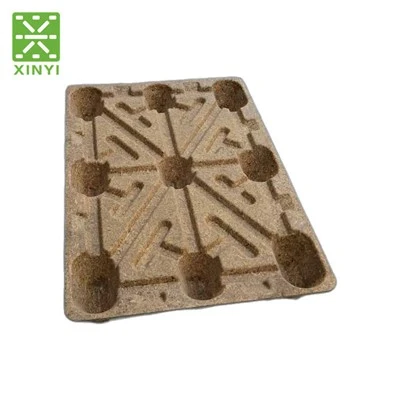
Single Deck Molded Pallet
10 models ranging from 1000 x 1000 x 100 mm to 1300 x 1300 x 150 mm
Integral deck and reinforcing ribs with...
Integral deck and reinforcing ribs with...
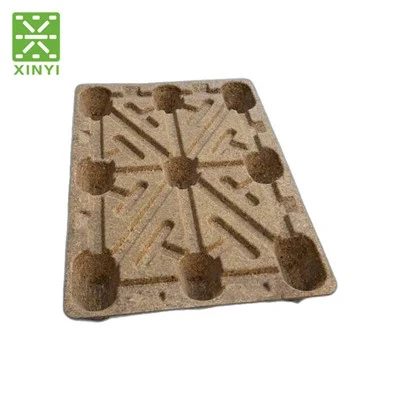
Single Deck Nine-Leg Molded Pallet
Deck, reinforcing ribs, and legs composed of the same type of material, agricultural straw fiber and MDI...
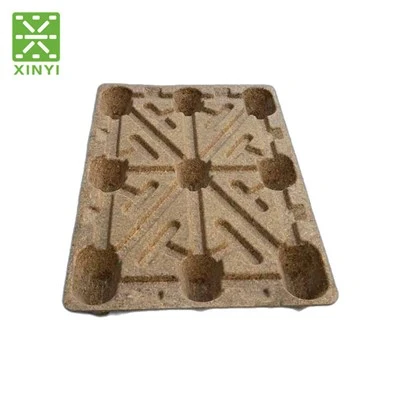
Single Deck Four-Way Entry Molded Pallet
Each model can be entered from all four sides using a forklift.
The dynamic and static load ratings are...
The dynamic and static load ratings are...
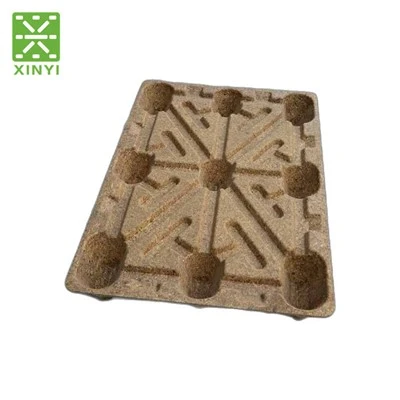
Single Deck Presswood Pallet
Single integrated deck and reinforcement ribs along with 9 legs
Made using agricultural straw fiber and MDI...
Made using agricultural straw fiber and MDI...
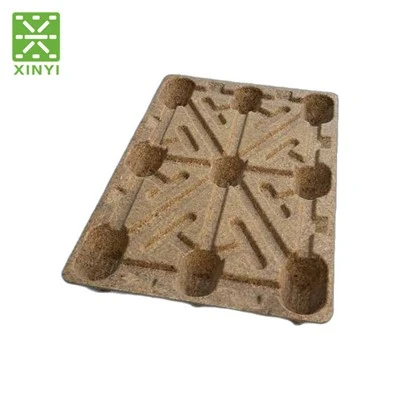
Single Deck Compressed Wood Pallet
Available in 10 sizes ranging from 1000 x 1000 x 100 mm to 1300 x 1300 x 150 mm.
Under 13 kg per pallet with...
Under 13 kg per pallet with...
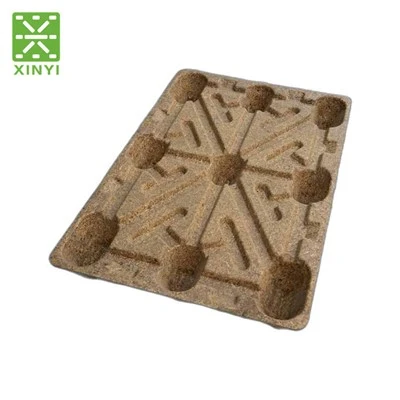
Single Deck Molded Wood Pallet
Ten standard footprints, from 1000 mm to 1300 mm
Deck, reinforcing ribs and nine feet pressed in one piece...
Deck, reinforcing ribs and nine feet pressed in one piece...